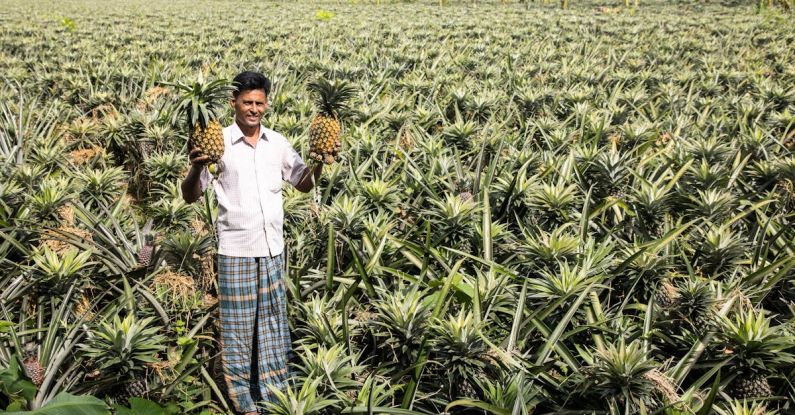
Ai in Agriculture: Optimizing Farming Practices
In the digital era, technological advancements have revolutionized various industries, and agriculture is no exception. With the integration of Artificial Intelligence (AI) in farming practices, there has been a significant shift towards more efficient and sustainable agricultural methods. AI in agriculture is not just a trend but a necessity in optimizing farming practices to meet the demands of a growing population while minimizing environmental impact. Let’s delve into how AI is transforming the agricultural sector.
**Improving Crop Monitoring and Management**
One of the key areas where AI is making a profound impact in agriculture is in crop monitoring and management. Traditional methods of monitoring crops often involve manual labor and rely heavily on experience and observation. However, AI technology, coupled with sensors and drones, enables farmers to gather real-time data on crop health, soil moisture levels, and pest infestations. This data can then be analyzed to provide insights into the overall health of the crops, allowing farmers to make informed decisions regarding irrigation, fertilization, and pest control.
**Precision Agriculture**
Precision agriculture, also known as precision farming, involves using technology to optimize field-level management with regard to crop cultivation. AI plays a critical role in precision agriculture by analyzing data collected from various sources, such as satellite imagery, sensors, and weather forecasts, to create detailed maps of fields. These maps can help farmers identify areas that require more or less input, such as water or fertilizer, thereby increasing efficiency and reducing waste. By implementing precision agriculture practices powered by AI, farmers can maximize crop yields while minimizing costs and environmental impact.
**Predictive Analytics for Yield Forecasting**
AI algorithms can analyze historical data on weather patterns, soil quality, crop rotations, and other factors to predict crop yields with a high degree of accuracy. By leveraging predictive analytics, farmers can anticipate potential challenges and adjust their farming practices accordingly to optimize yields. This proactive approach allows farmers to mitigate risks, such as crop failures due to adverse weather conditions or pest outbreaks, ultimately leading to more stable and profitable harvests.
**Enhancing Livestock Management**
AI is not only transforming crop cultivation but also revolutionizing livestock management practices. By utilizing sensors and AI-powered monitoring systems, farmers can track the health and behavior of individual animals in real-time. This data can provide valuable insights into the overall well-being of the livestock, enabling farmers to detect signs of illness or distress early on and take appropriate action. AI technology can also optimize feed management, breeding programs, and herd health, leading to improved animal welfare and increased productivity.
**Sustainable Agriculture Practices**
In recent years, there has been a growing emphasis on sustainable agriculture practices to reduce the environmental impact of farming. AI plays a crucial role in promoting sustainability by optimizing resource usage, minimizing chemical inputs, and reducing greenhouse gas emissions. By implementing AI-driven solutions, farmers can adopt regenerative farming practices that focus on enhancing soil health, preserving biodiversity, and promoting long-term sustainability. Ultimately, AI in agriculture is not just about increasing productivity but also about ensuring the health of the planet for future generations.
**Innovations in Agricultural Robotics**
AI-powered agricultural robots are revolutionizing farm operations by automating labor-intensive tasks, such as planting, weeding, and harvesting. These robots are equipped with advanced sensors and imaging technologies that enable them to navigate fields, identify crops, and perform precise actions with minimal human intervention. By deploying agricultural robots, farmers can increase efficiency, reduce labor costs, and address labor shortages in the agricultural sector. The integration of AI and robotics in agriculture is paving the way for a more mechanized and efficient farming future.